
Introducing CrossBar Crypto Hardware Wallet
Everything you need to know about our crypto wallet.
The CrossBar Team
5/20/20263 min read
CrossBar’s MPC-native hardware ecosystem brings vertically integrated security across premium active cards and ultra-portable USB dongles — all powered by the same secure silicon foundation.





1. Our Shared Security Foundation
As digital assets, decentralized identity, authentication, and AI-driven applications continue converging, the role of hardware security is rapidly evolving.
Users no longer want separate devices for crypto custody, authentication, password management, and secure signing. Developers and enterprises increasingly require flexible hardware infrastructure that can adapt across mobile, embedded, enterprise, and consumer environments without compromising security.
CrossBar’s hardware ecosystem was built with this future in mind.
Rather than developing standalone products with fragmented security models, CrossBar has built a vertically integrated, Multi-party Computation (MPC)-native hardware security platform powered by its proprietary Secure Processing Unit (SPU) architecture. This common foundation supports multiple device form factors, including the Portable Hardware Security Module (PHSM) 8 (internal codename: Active Card) and the PHSM 6 (internal codename: USB Dongle).
These are different form factors, yet same MPC security core.
CrossBar’s hardware lineup is designed around a shared philosophy:
Hardware-backed MPC signing
Secure self-custody without single points of failure
Integrated authentication and identity support
Flexible deployment across user and enterprise environments
End-to-end protection from silicon to software
This allows users, developers, and ecosystem partners to select the hardware experience best suited to their workflow while remaining on the same secure infrastructure layer.
2. Portable Hardware Security Module (PHSM) 8: The Active Card Experience
PHSM 8 represents CrossBar’s flagship active card platform.
Designed with a premium aluminum-and-glass body, E-Ink touchscreen, fingerprint authentication, Bluetooth, NFC, and wireless charging, PHSM 8 combines hardware wallet functionality with broader identity and authentication capabilities.
The device functions not only as an MPC hardware wallet, but also as:
a FIDO2 authenticator
a decentralized identity device
a secure signing platform
a passkey and authentication manager
an encrypted storage interface
Its larger display and interaction layer enable full clear-signing capability — allowing users to read and verify the complete contents of what they are signing directly on-device — as well as enhanced transaction visibility, metadata display, and authentication workflows compared to traditional “blind-signing” hardware wallets.
For enterprise environments, PHSM 8 supports higher-touch security workflows and advanced custody use cases.
For developers, it creates opportunities for richer user experiences built on top of secure hardware infrastructure.
For users, it simplifies the fragmented ecosystem of digital security devices into one portable platform.
3. Portable Hardware Security Module (PHSM) 6: The USB Dongle Experience
PHSM 6 approaches hardware security from another operational lens.
Built in a minimalist USB-C dongle form factor, PHSM 6 prioritizes portability, simplicity, and lightweight deployment while preserving the same MPC-native cryptographic architecture used in PHSM 8.
This form factor is particularly well suited for:
mobile-first workflows
developer integrations
lightweight signing environments
enterprise deployment at scale
embedded security applications
portable authentication use cases
an encrypted storage interface
Importantly, PHSM 6 is not a reduced-security product. Both PHSM devices are powered by the same Secure Processing Unit (SPU) and inherit the same vertically integrated MPC infrastructure underneath. Therefore, the difference lies in the user experience and deployment model.
4. Beyond Traditional Hardware Wallets
5. One Platform, Multiple Experiences
PHSM 8 and PHSM 6 ultimately represent the same security philosophy expressed through different hardware experiences. One prioritizes premium interaction, multifunctionality, and active identity workflows. The other prioritizes portability, lightweight deployment, and streamlined integration.
But underneath both is the same core principle:
Security infrastructure should adapt to different users and operational environments without fragmenting trust.
By combining MPC-native architecture, vertically integrated silicon, flexible hardware design, and open development initiatives, CrossBar is building toward a future where secure hardware becomes more interoperable, portable, and accessible across the next generation of digital systems.
— The CrossBar Team
CrossBar’s broader vision extends beyond standalone crypto wallets.
As blockchain infrastructure, decentralized identity, authentication systems, and confidential computing continue converging, secure hardware increasingly becomes foundational trust infrastructure for the broader digital ecosystem.
This flexibility is why CrossBar continues investing in open hardware tooling, SDKs, and vertically integrated silicon development.
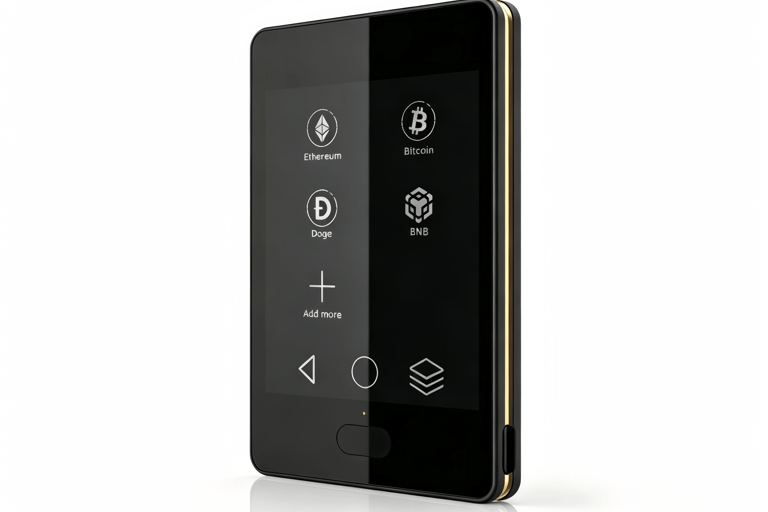
PHSM 8
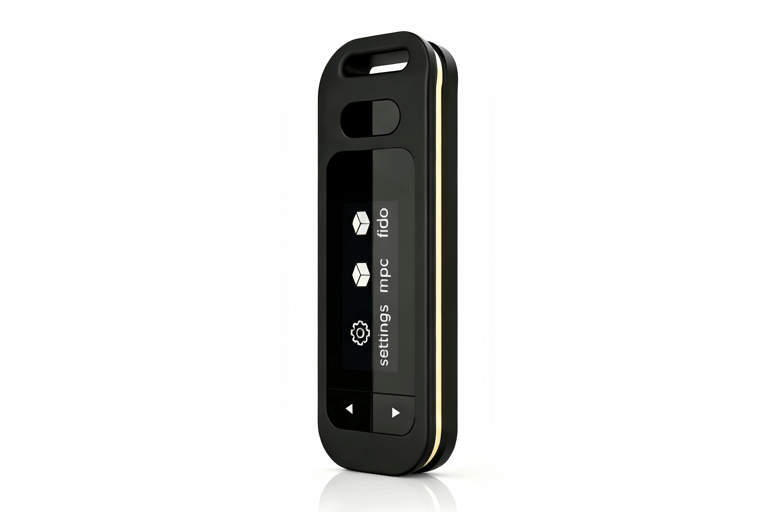
PHSM 6